Mesopotamian religion has been very interesting to study so far. certain aspects of it's structure are hard to conceptualize to someone outside of their mythological traditions. before i go too far, however, i have to say that this is not a polished, finished research report - as I've read about the beliefs of the Mesopotamians, i realize that I'm really only scratching the surface of a very complex polytheistic belief system. having said that, let's jump right in-
"in the beginning" as Christians would say, there was a watery chaos. from this chaos emerged Taimat and Abzu, who then created the four creator gods, The highest of the 4 gods was the sky-god An, the over-arching bowl of heaven. Next came Enlil who could either produce raging storms or act to help man. Nin-khursag was the earth goddess. The 4th god was Enki, the water god and patron of wisdom. there is a marked difference in the nature of these gods and the god of Christianity. while we may see god as influencing the weather,to Mesopotamians, enlil didn't control the weather, enlil was the weather. the Mesopotamians believed that their gods were continuously present with them (notably, this phrase sounds familiar to Christians, but is meant in a MUCH more literal way) these four gods were supported by a host of 50 advisor gods, each having their own role in the universe. however, the lines between god and spirit and transcendent presence were blurred to the point that while An was the highest god, the flowers in the field or the thunder accompanying the storm or the stream by your village could in its own sphere, be a god.
this fluidity of definition - a wide open canon - bears a close relationship to the oral nature of their belief system. I'm not going to try to guess which led to the other - stories of things experienced leading to social lore of gods of nature, or belief in the presence of gods all around them leading to stories shared around fires of the actions of the gods witnessed in their lives. the continual conversation between the young and the old, the community coming together to share these stories, forming a series of rites and rituals over time. the method of transmission in this case definitely affected the content of that knowledge.
how do you think the method of transmission of our religious beliefs affects the content thereof? and how does that compare to other modern religions? or to the religions you are studying?
Friday, September 30, 2011

Monday, September 26, 2011
"They mock me. Gods of Thebes!"
Ancient Greek religion sets itself in polytheist beliefs, with gods ranging from the mighty Zeus, ruler of all the gods, to Hades, the guardian of the Underworld. The ancient Greeks devoted their rituals to worshipping and pleasing the gods through animal sacrifices, temple-building, and other offerings. These ancient rituals were passed down orally from one to another partly through the context of dramas and comedies.
the Treasures of Darkness
seeing as how no one is scheduled to post from our group on Monday, i thought i would post a "progress" update on my research so far. i found a book on Google scholar that the library happened to also have titled "the treasures of darkness: a history of Mesopotamian religion" (awesome title, right?) well, in the first little bit, Jacobson(the author) talks about some general stuff that goes with our entire group, not just my civilization.

"basic to all religion... is, we believe, a unique experience of confrontation with power not of this world. Rudolph Otto called this confrontation "numinous" and analyzed it as the experience of a myseterium tremendum et fascinosum, a confrontation with a "wholly other" outside of normal experience and indescribable in its terms; terrifying, ranging from sheer demonic dread through awe to sublime majesty; and fascinating, with irresistible attraction, demanding unconditional allegiance. it is the positive human response to this experience in thought( myth and theology) and action (cult and worship) that constitutes religion.
since the Numinous is not of this world it cannot in any real sense of the word be "described"; for all available descriptive terms are grounded in worldly experience and so fall short. at most, as Otto points out, it may be possible to evoke the human psychological reaction to the experience by means of analogy, calling upon the suggestive power of ordinary worldly experiences, the response to which in some sense resembles or leads toward the response to the Numinous, and which thus may serve as ideograms or metaphors for it"
Jacobsen, Thorkild. The Treasures of Darkness: a History of Mesopotamian Religion. New Haven: Yale UP, 1976. Print.
"basic to all religion... is, we believe, a unique experience of confrontation with power not of this world. Rudolph Otto called this confrontation "numinous" and analyzed it as the experience of a myseterium tremendum et fascinosum, a confrontation with a "wholly other" outside of normal experience and indescribable in its terms; terrifying, ranging from sheer demonic dread through awe to sublime majesty; and fascinating, with irresistible attraction, demanding unconditional allegiance. it is the positive human response to this experience in thought( myth and theology) and action (cult and worship) that constitutes religion.
since the Numinous is not of this world it cannot in any real sense of the word be "described"; for all available descriptive terms are grounded in worldly experience and so fall short. at most, as Otto points out, it may be possible to evoke the human psychological reaction to the experience by means of analogy, calling upon the suggestive power of ordinary worldly experiences, the response to which in some sense resembles or leads toward the response to the Numinous, and which thus may serve as ideograms or metaphors for it"
Jacobsen, Thorkild. The Treasures of Darkness: a History of Mesopotamian Religion. New Haven: Yale UP, 1976. Print.
Thursday, September 22, 2011
Once Upon a Bathtub

People keep themselves clean. this is a rather safe assumption to make about our society. every once in a while, you'll walk past someone or someone will sit next to you in class, and you'll think - man, that guy needs a shower. but in reality, i don't think anyone at BYU showers less than twice a week. it's just not done. now check out this quote straight out of the 18th century. "I bore it better than i expected, not having been wett all over att once, for 28 years past." an upstanding citizen of Philadelphia, Elizabeth Drinker, said this of her first experience using the revolutionary product her husband had installed a year before - a shower box.
now, i don't know to what extent a 1790's shower box resembles the shower each of us uses every day, but that's not entirely the point. the point is, that this socially active and well-liked woman had gone 28 years without being immersed in water. the eeewwww factor intensifies as you realize that at elizabeth's time, a "bath" did not include soap, but was an immersion in either cold water or mineral water (the cold water was thought to constrict the blood vessels near the surface of the skin, then a vigorous rubbing with a towel would reopen them, giving a "vivifying" sensation).
bathing has always been associated with medicine - doctors of elizabeth's day recommended dunking an infant in cold water once a day for the first several months of life, and recommended cold baths to those whose constitutions were "liable to nervous, hysteric, and hypochondriacal affections, as well as to frequent attacks of flatulency and consequent indigestion" while warm water baths were prescribed to treat other ailments.

as medical knowledge increased, so did the general population's understanding of the benefits of cleanliness(starting with the upper echelons of society, of course). heightened understanding of the oil producing qualities of the epidermis, and the nature thereof to acquire "scum and vapor" led some to buy tin bathtubs for their homes, and to include soap as a part of the daily washing routine. others, such as Elizabeth, acquired these habits and knowledges as a part of the proverbial struggle to "keep up with the joneses". suddenly, personal cleanliness was a sign of status, a prerequisite to being accepted as normal in society. the ability of folk knowledge to be a group distinguishing thing (hunters vs farmers vs weavers)(the rich who bathe and the poor who can't afford to/wouldn't know how to operate a bathtub if they owned one) is clear to see in this example.
so, i think i like this example because it helps us see the origin of a folk knowledge that we all seemingly take for granted. one of my biggest questions for every folk knowledge post i've read is "so who came first, the chicken or the egg" who was the guy who just figured it out one day? in this case, it was some scientist sitting in a stuffy lab looking through a microscope who found out your skin makes gross stuff. that led to a chain of social disgust, fears and expectations that has landed us at the point that we "[crawl] around the house scrubbing and waxing and spraying germ killer on the kids."
response to pokatok

 i've actually been to the ruins of one of the pokatok courts - on our honeymoon, my wife and i went to the ruins of Coba, home of the tallest Mayan pyramid still in existence. (chichen itza is the one most people think of when they think myans) but anyways, i wanted to post a few pics and a video, and couldn't really do that in the comments box.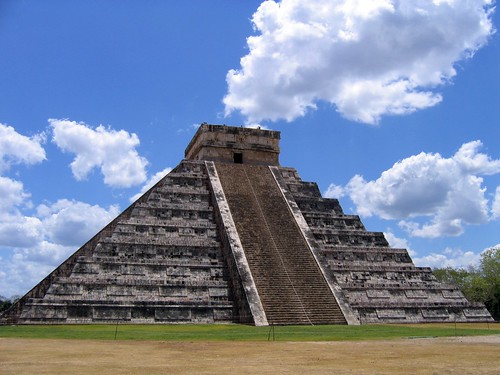
the real response i have to crystal's post is another thing we learned on the same tour - we also visited Tulum, a Mayan port city, and there was a building there, with small dark corridors near ground level leading back to little rooms, big enough for one person. these were the Myan equivalent of the maternity ward. our tour guide told us that the mayans viewed childbirth as a battle that the mother had to fight between life and death. he said that they also believed that this battle had to be fought alone if the mother and child were to be truly victorious - so, armed with nothing but advice from her mother and a rope to wrap around her stomach to provide a little extra push, a pregnant mother would enter one of these rooms when her water broke, and either emerge alive with a newborn baby, or lose the battle. i thought this might be an interesting tidbit of folk knowledge, since Dr.Petersen mentioned midwifery, but to my knowledge no one has done a post on that.
NOTE: so after writing this, i looked up the Wikipedia article on Mayan midwifery, which seems to explain an experience much different than described by my tour guide. the difference may be that the guide was talking about pre-conquistador traditions, whereas the Wikipedia article seems to focus on post-conquistador and modern traditions
Wednesday, September 21, 2011
Pokatok
"The ball game was literally a matter of life and death for ancient Mesoamericans." This sentence is true of the game Pokatok, played by the ancient Mayans. I remember seeing this game (stop at 3:40) in the DreamWorks film The Road to Eldorado. While it presented it in a comical and not all together true way, it still remained to intrigue me. I remember later watching a Mayan documentary while in a Spanish class and became further interested in the the Mayans culture and customs. Because of this small amount of information I had of them, it was enough to whet my appetite so I decided to expand it and learn about their popular ballgame: Pokatok.
Tuesday, September 20, 2011
Did I ever tell you that I'm half Greek?
My mother was born in Nebraska, but her parents came straight from Greece. It's caused me to be very curious from time to time about my Greek heritage. In my most recent research, I realized how the ancient Greeks viewed the mother tongue and father tongue.
Subscribe to:
Posts (Atom)