"While many believe that the outpouring of revolutionary thought in the Enlightenment era in England and Europe gained momentum through the use of the printed word, it was also a catalyst for Royal and Ecclesiastical censorship, which resulted in the impediment of the printing industry."
Showing posts with label Printed Knowledge. Show all posts
Showing posts with label Printed Knowledge. Show all posts
Wednesday, December 7, 2011
Censorship Rough Draft
Ok, so after thinking and researching some more about censorship, I found a pretty good thesis:

Writing a Paper on Censorship
As I've been writing my paper on censorship before 1700, I have run across some interesting things I would like to share here.
Tuesday, December 6, 2011
Finding a Thesis
When we were first assigned an annotated bibliography I was reminded of other research papers I had done. Most notably, my high school senior paper, which was on ambient noise imaging. When I started that research project, I had this bright idea and no clue as to who might have already researched and tried it. Many dead-end search queries on online databases taught me the hard way that getting the right word or phrase was vital, so I began to keep a journal of what I found and how. Some absolutely brilliant work surfaced while I was hunting for the 'right' query, so, in spite of it not being quite what I wanted, I kept it. It was a fun, exploratory game. After about 8 pages of notes, I was ready to start my 10-page paper.
At the same time, I was looking into casting rather than sintering advanced ceramics. Naturally, this meant I had two running journals of what I had found.
The point? The idea of "keeping an annotated bibliography" might be new to me, but the practice certainly is not--complete with glib storytelling.
Problem is, I generally have to have some point, interest, or question I'm trying to answer, and I don't.
Monday, December 5, 2011
Research Paper Update
As I have been working on my essay it has been kind of difficult to find an arguable claim considering dictionaries, as outlined in Dr. Burtons thesis powerpoint. I was although, able to connect it quite easily to the learning outcomes. In looking through the outcomes for a connection, the third one, communicating knowledge, basically popped out at me. The words preserved, communicated, and experienced seemed to help define my stance on the dictionary and the different things I have learned historically and personally.
Thursday, December 1, 2011
Better Late Than Never..... ?
so i realize i still haven't finished my post about the rosetta project!! i was going to do it over thanksgiving, then forgot untill class thursday (i know - worst student ever!)
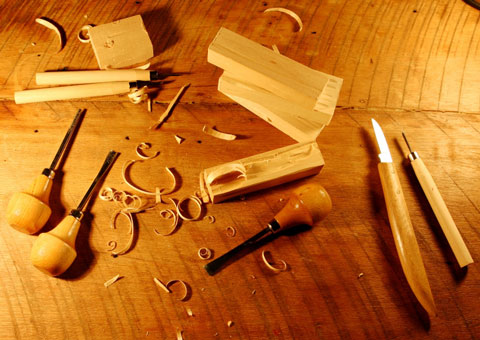
so i was involved in the making of the artifacts in a kinda weird way. i never actually saw the artifact our group made until the day of class - i was put in charge of 2 things... 1) find something to translate. this i did by visiting with Dr. Stratford - an expert on ancient Mesopotamian. he informed me that BYU has a mesopotamian nail (like the kind you build buildings with) that had an inscription written on it, and had the translation. so i sent that off to my group and got to work on the real difficult part of my job - making the stylus with which to write in cuneiform. i picked out a hard wood dowel, assuming that a softer wood would soak up the moisture from the clay and make it harder to use, then there was the decision of what would be easier -a triangle tool and a line tool, or a two in one tool? i decided on the second, thinking i would be annoyed by having to continuously switch between two sticks.
So then it came ot actually carving the stylus. the hard wood i chose made the carving process difficult, but not impossible. as i carved, i wondered - who did this in mesopotamia? did everyone make their own stylus to fit their personal prefrences? or was there a stulus maker? what materials were they made of? the clay tablets i have seen have writing that is MUCH smaller than that on our artefact, so their styluses would have had to be made of either an extremely hard wood that would keep its rigidity when carved down to such a small size, or made of metal or stone. there are problems with both of
 these, however, in that stone is very brittle, and metal is difficult and time consuming to shape. in the end, i had an image of ollivander's wand store in Harry Potter, but rather than wands, there would be styluses in little boxes on the shelves, where you could come and try out a limestone size six stylus, then a copper size eight, then an oak size five.
so maybe that's taking it a bit too far, but the INDUSTRY of writing is a very interesting thing - whether it be clay and a stylus, or vellum and parchment, or paper and leather, or ink and bamboo leaves, or stone and chisels, or loose-leaf college ruled paper and Bic pens, there seems to have been an industry of writing as long as there has been writing. this also begs the question - how is the paper industry (and others involved) going to survive the digitization of society, when the rules of the writing business are rewritten?
FINAL part A
today's lecture was pretty interesting - i have some thoughts on the final paper, but I'm still in the brainstorming stages -
when Dr. Petersen mentioned the guy who coined the phrase "the dark ages" as opposed to the "light ages" that proceeded it (ancient Greece) the gears started turning, and i wondered - how does humankind go from the wealth of knowledge and freedom that was seen in ancient Greece and Rome to the "darkness" of the middle ages?? what was the difference between the two societies? i believe a large part of it had to do with the availability and the communication of knowledge - it seems that the dark ages were wso dark because there was a VERY low rate of literacy (used as an indication of % of the population that is educated) as opposed to Greece or Rome, where it definitely wasn't 100% literacy, but the information and education was much more widespread. so does the amount of education determine how "good "a society is? can that be shown by examining literacy? i guess i'll find out!
when Dr. Petersen mentioned the guy who coined the phrase "the dark ages" as opposed to the "light ages" that proceeded it (ancient Greece) the gears started turning, and i wondered - how does humankind go from the wealth of knowledge and freedom that was seen in ancient Greece and Rome to the "darkness" of the middle ages?? what was the difference between the two societies? i believe a large part of it had to do with the availability and the communication of knowledge - it seems that the dark ages were wso dark because there was a VERY low rate of literacy (used as an indication of % of the population that is educated) as opposed to Greece or Rome, where it definitely wasn't 100% literacy, but the information and education was much more widespread. so does the amount of education determine how "good "a society is? can that be shown by examining literacy? i guess i'll find out!
Ye Oulde Bookes
After the Special Collections experience, I wandered through the King James Bible Exhibit in the library.
It was cool.
The oldest books had a style of script called fractura, which we had just learned about. The vertical strokes are very thick, while horizontal connections are thin and even ephemeral at times. This makes it rather hard to read, Bro. Skousen, and boy was he right! Contrasting this with the Roman fonts--even with the old long 's' characters--was very informative. I finally have a handle on why I dislike old script so much, and the oddly-named "Times New Roman" now makes sense!
For the record, I'm excited now any time I see various fonts and title pages, as I'm reminded of that lecture and the lecture reminds me of the large quantities of information quietly sitting in the text and design of a book.
Seeing the extremely find handiwork that went into some of the less typographically-oriented texts reminds me of something we have today: coffee table books, often from National Geographic or the World Wildlife Foundation. These massive tomes contain a moderate amount of information nestled between massive swaths of gorgeous photography all layered on thick, glossy paper. (Ink chemistry--why such paper is used--is a set of books unto itself.)
It was cool.
The oldest books had a style of script called fractura, which we had just learned about. The vertical strokes are very thick, while horizontal connections are thin and even ephemeral at times. This makes it rather hard to read, Bro. Skousen, and boy was he right! Contrasting this with the Roman fonts--even with the old long 's' characters--was very informative. I finally have a handle on why I dislike old script so much, and the oddly-named "Times New Roman" now makes sense!
For the record, I'm excited now any time I see various fonts and title pages, as I'm reminded of that lecture and the lecture reminds me of the large quantities of information quietly sitting in the text and design of a book.
Seeing the extremely find handiwork that went into some of the less typographically-oriented texts reminds me of something we have today: coffee table books, often from National Geographic or the World Wildlife Foundation. These massive tomes contain a moderate amount of information nestled between massive swaths of gorgeous photography all layered on thick, glossy paper. (Ink chemistry--why such paper is used--is a set of books unto itself.)
Just for Fun
In doing research for my bibliography on dictionaries I was able to come upon some "low" and "cant" words, or in other words, slang or jargon words. They were recorded by Samuel Johnson and help to show his personality and writing style, which can prove to be difficult when writing a dictionary.
Here are some interesting words:
Dandiprat: a little fellow; a urchin; a word used sometimes in fondness, sometimes in contempt.
To conjobble: to settle, to discuss. A low cant word.
Clodplate: a stupid fellow; a dolt; a thickscull.
Kicksey-wicksey: a made word in disdain or ridicule of a wife.
To phog: to rob; to steal; a low word.
Here are some interesting words:
Dandiprat: a little fellow; a urchin; a word used sometimes in fondness, sometimes in contempt.
To conjobble: to settle, to discuss. A low cant word.
Clodplate: a stupid fellow; a dolt; a thickscull.
Kicksey-wicksey: a made word in disdain or ridicule of a wife.
To phog: to rob; to steal; a low word.
Wednesday, November 30, 2011
Unit Four: Printed Knowledge and the History of Dictionaries.
In thinking of what topic to use for my bibliography I thought of the different printed knowledge resources that I use. I found that not a day goes by in which I don't use a dictionary. Either to check my spelling or to make sure I'm using my words right.
While doing research I stumbled upon this quote which I thought was a pretty accurate intro into my topic.
"No reference book, perhaps no book of any kind except the Bible, is so widely used as "the dictionary."'
Pretty cool stuff.
So the research part was surprisingly fun. I was a little nervous to use printed resources as it was something I had never done before. It was interesting to see the little things you miss when actually going and doing the research physically. Actually turning the pages or cross referencing certain books and having to search shelves and follow library jargon. The library doesn't seem as daunting anymore and yet it's amazing to consider all the knowledge it holds on its shelves.
A fun thing to be able to do was read the book, search it's footnotes, and then find that referenced book. It made it easier to see how interrelated certain aspects of knowledge are and to be able to actually use the same books that authors used in their research. It also helped to create a sort of timeline as different authors from different times built upon eachother.
Another things to observe that I remembered from class discussions was the affect that highlighting or written notes had on the book. I found that I was drawn to the important parts, which was a help, while at the same time, I felt as if I might be overlooking things as my eyes would automatically be drawn to already highlighted portions. It definitely has its pros and cons.
Anyway, here goes my bibliography on the history of dictionaries.
While doing research I stumbled upon this quote which I thought was a pretty accurate intro into my topic.
"No reference book, perhaps no book of any kind except the Bible, is so widely used as "the dictionary."'
Pretty cool stuff.
So the research part was surprisingly fun. I was a little nervous to use printed resources as it was something I had never done before. It was interesting to see the little things you miss when actually going and doing the research physically. Actually turning the pages or cross referencing certain books and having to search shelves and follow library jargon. The library doesn't seem as daunting anymore and yet it's amazing to consider all the knowledge it holds on its shelves.
A fun thing to be able to do was read the book, search it's footnotes, and then find that referenced book. It made it easier to see how interrelated certain aspects of knowledge are and to be able to actually use the same books that authors used in their research. It also helped to create a sort of timeline as different authors from different times built upon eachother.
Another things to observe that I remembered from class discussions was the affect that highlighting or written notes had on the book. I found that I was drawn to the important parts, which was a help, while at the same time, I felt as if I might be overlooking things as my eyes would automatically be drawn to already highlighted portions. It definitely has its pros and cons.
Anyway, here goes my bibliography on the history of dictionaries.
Tuesday, November 29, 2011
Non-European Printing: an Enigma
Welcome, dear reader, to a dark tale of endless wo, of deadends and murky fens, of victory and defeat.
Looking down the list of topics, I found the entry "Non-European Printing." With visions of sweeping reference works carrying me conveniently to my destination atop a pile of relevant sources, I set off to the campus library.
What I found there was...less than idyllic. While the library computer catalog provided me with a few hits, its very generality of purpose renders it nearly useless. By the third page of results of one search I was reading about King Louis XIV's history, and "printing" brings up Uinta County: its place in history. Really?
Still, I found a few gems this way. I started off looking for A Short History of the Printing Press without paying mind to the publication year. This was in the section on the 5th floor about printing--which is well picked over at this point. I noticed quite a few titles that were intriguing. First, though, is the book I was looking for:
Looking down the list of topics, I found the entry "Non-European Printing." With visions of sweeping reference works carrying me conveniently to my destination atop a pile of relevant sources, I set off to the campus library.
What I found there was...less than idyllic. While the library computer catalog provided me with a few hits, its very generality of purpose renders it nearly useless. By the third page of results of one search I was reading about King Louis XIV's history, and "printing" brings up Uinta County: its place in history. Really?
Still, I found a few gems this way. I started off looking for A Short History of the Printing Press without paying mind to the publication year. This was in the section on the 5th floor about printing--which is well picked over at this point. I noticed quite a few titles that were intriguing. First, though, is the book I was looking for:
Biblio - Mania!!!
I chose to research the history of literacy for my annotated bibliography - I'm fascinated with how the transition from orality to literacy affects society. so i began in the library - i may have cheated, i wasn't too sure how we were and weren't supposed to find sources, so to get the ball rolling, i did a simple search of the library database for history of literacy. this led me to my first source. the other sources i found after this came in one of two ways. first, looking up what books the author had referenced , then doing the same with those books, then doing the same with those. there were also several interesting and applicable books on the shelves near books i was already looking for, so by just wandering the shelves a bit while searching for three books, i ended up with six. the process was very informative - as i found that nearly all the good books are on the bottom shelf, so you have to get down on your knees ans look like a fool to find good sources. it is also interesting to note that print knowledge enables a link to other knowledge resources - creating a web of knowledge that builds on itself perpetually (have you ever played the game where you have to connect one celebrity to another by the costars of the movies they've been in? it would be kinda fun to try to connect subjects or books by what books have referenced what other books)
so anyways - here's my bibliography - Enjoy!!
Historical Literacy:
Friedmann, Fredrick G., The Hoe and the Book: an Italian Experiment in Community Development, Cornell University Press, 1960. This book follows the efforts of a group called the UNLA (translated name is association for the fight against illiteracy) who advocate and promote literacy for rural Italian citizens with the belief that higher literacy leads to higher Quality of life. though this is a more modern source - the question of the benefits of literacy is pointedly addressed and could be applied top ancient civilizations.
Havelock, Eric A., The Literate Revolution in Greece and its Cultural Consequences, Princeton University Press, 1982. this book examines the cultural impacts that occurred from the shift in ancient Greek society because of the shift from orality to literacy. it examines the problems of transcribing the oral code of a people into a written code, the relationship between sound and sign, the preliteracy of the Greeks, the recording of homer's works and other things.
Havelock, Eric A., The Muse Learns to Write, Reflections on Orality and Literacy from Antiquity to Present, Yale University Press, 1986. This book's focus is on what happens in societies when the shift from orality to literacy is made. especially telling is the Greek shift from orality to literacy. Havelock states "the way we use our senses and the way we think are connected, and ... in the transition from Greek orality to Greek literacy the terms of this connection were altered, with the result that thought patterns were altered also, and have remained altered..."
Hezser, Catherine. Jewish Literacy in Roman Palestine: texts and studies in ancient Judaism. 2001. this book is an in depth analysis of ancient Jewish literacy. it traces the writings and literacy of biblical-era Jews, grecco-roman Jews, educational opportunities for each, including an examination of ancient Jewish educational institutions. other subjects discussed include the existence of archives and libraries, the distribution and ownership of books, the social status of literates and the view of illiteracy, and others.
Houston, R. A., Scottish Literacy and the Scottish Identity: illiteracy and society in Scotland and England 1600-1800, Cambridge university press, 1985. This book examines the literate revolution of Scotland from the 1600s to the 1800s. this includes the reasons for literacy and an analysis of literacy vs orality. Houston states; "We must question the simplistic notion of a non-literate society as somehow a culturally substandard version of a literate one"
Soltow, Lee, The Rise of Literacy and the Common School in the United States: a socioeconomic analysis to 1870. this is a book about literacy in early American history. it examines literacy by time periods - prior to 1840, and 1840-1870, with other studies and examples from similar time frames. this book is a socioeconomic analysis, giving a summary of the economic consequences of illiteracy in this time frame, but since economy plays an integral role in culture, this may be an interesting filter through which to view the cultural impact of literacy as well.
so anyways - here's my bibliography - Enjoy!!
Historical Literacy:
Friedmann, Fredrick G., The Hoe and the Book: an Italian Experiment in Community Development, Cornell University Press, 1960. This book follows the efforts of a group called the UNLA (translated name is association for the fight against illiteracy) who advocate and promote literacy for rural Italian citizens with the belief that higher literacy leads to higher Quality of life. though this is a more modern source - the question of the benefits of literacy is pointedly addressed and could be applied top ancient civilizations.
Havelock, Eric A., The Literate Revolution in Greece and its Cultural Consequences, Princeton University Press, 1982. this book examines the cultural impacts that occurred from the shift in ancient Greek society because of the shift from orality to literacy. it examines the problems of transcribing the oral code of a people into a written code, the relationship between sound and sign, the preliteracy of the Greeks, the recording of homer's works and other things.
Havelock, Eric A., The Muse Learns to Write, Reflections on Orality and Literacy from Antiquity to Present, Yale University Press, 1986. This book's focus is on what happens in societies when the shift from orality to literacy is made. especially telling is the Greek shift from orality to literacy. Havelock states "the way we use our senses and the way we think are connected, and ... in the transition from Greek orality to Greek literacy the terms of this connection were altered, with the result that thought patterns were altered also, and have remained altered..."
Hezser, Catherine. Jewish Literacy in Roman Palestine: texts and studies in ancient Judaism. 2001. this book is an in depth analysis of ancient Jewish literacy. it traces the writings and literacy of biblical-era Jews, grecco-roman Jews, educational opportunities for each, including an examination of ancient Jewish educational institutions. other subjects discussed include the existence of archives and libraries, the distribution and ownership of books, the social status of literates and the view of illiteracy, and others.
Houston, R. A., Scottish Literacy and the Scottish Identity: illiteracy and society in Scotland and England 1600-1800, Cambridge university press, 1985. This book examines the literate revolution of Scotland from the 1600s to the 1800s. this includes the reasons for literacy and an analysis of literacy vs orality. Houston states; "We must question the simplistic notion of a non-literate society as somehow a culturally substandard version of a literate one"
Soltow, Lee, The Rise of Literacy and the Common School in the United States: a socioeconomic analysis to 1870. this is a book about literacy in early American history. it examines literacy by time periods - prior to 1840, and 1840-1870, with other studies and examples from similar time frames. this book is a socioeconomic analysis, giving a summary of the economic consequences of illiteracy in this time frame, but since economy plays an integral role in culture, this may be an interesting filter through which to view the cultural impact of literacy as well.
Monday, November 28, 2011
Annotated Bibliography on Censorship
I have really enjoyed researching an overarching theme in each of the units, and especially in this unit on printed knowledge, which is how knowledge has been controlled and thus used to create dichotomies between those who "know" and those who don't "know." Knowledge seems to have always been used to place one group above another through putting prices on the knowledge, controlling the language of the knowledge, and, as I have more recently researched, through censorship of knowledge. That's a concept: The ability to manipulate knowledge, even to the ability to remove it completely from a referable source, creates even more power in the hands of the censor.
Below is an annotated bibliography of several books I found about the early beginnings of censorship in the printing world.
Subscribe to:
Posts (Atom)