Tuesday, December 13, 2011
Final Blog Post.... (insert mixed feelings)

Prep for the salon... saloon would be cooler.
So I figured the best way to show my preparation for the final would be to post my notes I’ve taken as I paroused the blogs trying to find themes. So here you go…
Thursday, December 1, 2011
Better Late Than Never..... ?

so i realize i still haven't finished my post about the rosetta project!! i was going to do it over thanksgiving, then forgot untill class thursday (i know - worst student ever!)
so i was involved in the making of the artifacts in a kinda weird way. i never actually saw the artifact our group made until the day of class - i was put in charge of 2 things... 1) find something to translate. this i did by visiting with Dr. Stratford - an expert on ancient Mesopotamian. he informed me that BYU has a mesopotamian nail (like the kind you build buildings with) that had an inscription written on it, and had the translation. so i sent that off to my group and got to work on the real difficult part of my job - making the stylus with which to write in cuneiform. i picked out a hard wood dowel, assuming that a softer wood would soak up the moisture from the clay and make it harder to use, then there was the decision of what would be easier -a triangle tool and a line tool, or a two in one tool? i decided on the second, thinking i would be annoyed by having to continuously switch between two sticks.
So then it came ot actually carving the stylus. the hard wood i chose made the carving process difficult, but not impossible. as i carved, i wondered - who did this in mesopotamia? did everyone make their own stylus to fit their personal prefrences? or was there a stulus maker? what materials were they made of? the clay tablets i have seen have writing that is MUCH smaller than that on our artefact, so their styluses would have had to be made of either an extremely hard wood that would keep its rigidity when carved down to such a small size, or made of metal or stone. there are problems with both of
 these, however, in that stone is very brittle, and metal is difficult and time consuming to shape. in the end, i had an image of ollivander's wand store in Harry Potter, but rather than wands, there would be styluses in little boxes on the shelves, where you could come and try out a limestone size six stylus, then a copper size eight, then an oak size five.
so maybe that's taking it a bit too far, but the INDUSTRY of writing is a very interesting thing - whether it be clay and a stylus, or vellum and parchment, or paper and leather, or ink and bamboo leaves, or stone and chisels, or loose-leaf college ruled paper and Bic pens, there seems to have been an industry of writing as long as there has been writing. this also begs the question - how is the paper industry (and others involved) going to survive the digitization of society, when the rules of the writing business are rewritten?
FINAL part A
when Dr. Petersen mentioned the guy who coined the phrase "the dark ages" as opposed to the "light ages" that proceeded it (ancient Greece) the gears started turning, and i wondered - how does humankind go from the wealth of knowledge and freedom that was seen in ancient Greece and Rome to the "darkness" of the middle ages?? what was the difference between the two societies? i believe a large part of it had to do with the availability and the communication of knowledge - it seems that the dark ages were wso dark because there was a VERY low rate of literacy (used as an indication of % of the population that is educated) as opposed to Greece or Rome, where it definitely wasn't 100% literacy, but the information and education was much more widespread. so does the amount of education determine how "good "a society is? can that be shown by examining literacy? i guess i'll find out!
Tuesday, November 29, 2011
Biblio - Mania!!!
so anyways - here's my bibliography - Enjoy!!
Historical Literacy:
Friedmann, Fredrick G., The Hoe and the Book: an Italian Experiment in Community Development, Cornell University Press, 1960. This book follows the efforts of a group called the UNLA (translated name is association for the fight against illiteracy) who advocate and promote literacy for rural Italian citizens with the belief that higher literacy leads to higher Quality of life. though this is a more modern source - the question of the benefits of literacy is pointedly addressed and could be applied top ancient civilizations.
Havelock, Eric A., The Literate Revolution in Greece and its Cultural Consequences, Princeton University Press, 1982. this book examines the cultural impacts that occurred from the shift in ancient Greek society because of the shift from orality to literacy. it examines the problems of transcribing the oral code of a people into a written code, the relationship between sound and sign, the preliteracy of the Greeks, the recording of homer's works and other things.
Havelock, Eric A., The Muse Learns to Write, Reflections on Orality and Literacy from Antiquity to Present, Yale University Press, 1986. This book's focus is on what happens in societies when the shift from orality to literacy is made. especially telling is the Greek shift from orality to literacy. Havelock states "the way we use our senses and the way we think are connected, and ... in the transition from Greek orality to Greek literacy the terms of this connection were altered, with the result that thought patterns were altered also, and have remained altered..."
Hezser, Catherine. Jewish Literacy in Roman Palestine: texts and studies in ancient Judaism. 2001. this book is an in depth analysis of ancient Jewish literacy. it traces the writings and literacy of biblical-era Jews, grecco-roman Jews, educational opportunities for each, including an examination of ancient Jewish educational institutions. other subjects discussed include the existence of archives and libraries, the distribution and ownership of books, the social status of literates and the view of illiteracy, and others.
Houston, R. A., Scottish Literacy and the Scottish Identity: illiteracy and society in Scotland and England 1600-1800, Cambridge university press, 1985. This book examines the literate revolution of Scotland from the 1600s to the 1800s. this includes the reasons for literacy and an analysis of literacy vs orality. Houston states; "We must question the simplistic notion of a non-literate society as somehow a culturally substandard version of a literate one"
Soltow, Lee, The Rise of Literacy and the Common School in the United States: a socioeconomic analysis to 1870. this is a book about literacy in early American history. it examines literacy by time periods - prior to 1840, and 1840-1870, with other studies and examples from similar time frames. this book is a socioeconomic analysis, giving a summary of the economic consequences of illiteracy in this time frame, but since economy plays an integral role in culture, this may be an interesting filter through which to view the cultural impact of literacy as well.
Friday, November 18, 2011
response to "dogma"
while i'm guessing that the first two would be complete poppycock, the third is probably sounding pretty good to you.
but my question is WHY??? why would these essential unquestionable FACTS(according to those that believe them) be questioned?
is it because education enhances skepticism?
is it an us vs them issue?
is it because the mass quantity of information that is available (a lot of it being GARBAGE) forces people to choose what they will and will not believe?
^^^does the above question suggest that the "digital" age has brought about the necessity of new social skills?
^^^does this happen whenever there is a shift in knowledge institutions?
Saturday, November 12, 2011
oops - where'd friday go???
So as we have been talking about the different groups and their experiences writing and translating ancient texts, it has really struck me how interconnected the different aspects of writing are.
First of all, I never realized how much the writing medium influences/is influenced by the subject of the writing. What really surprised me was the realization that I have made medium decisions at several times based on subject. For instance, I take class notes on loose leaf paper with whatever will write, but my personal journal is leather bound, acid-free paper and is only written on with select pens. There’s a reason sticky notes don’t hang around for years at a time – that medium is designed for a very specific kind of information.
Also, not all civilizations had stone tablets, or metal plates, etc. but I feel it is important to note that although the writing medium itself may not fit into this importance-hierarchy theory, I feel like the thousands of man hours of work and the immense amount of resources that go into building the temple to house the less durable mediums still allow us to count that as an effort to preserve the important stuff.
So, If we take this observation – important information is put on a lasting medium – and add that the harder it is to write on the medium, the more important the information has to be in order to be recorded (think of how writing in your personal journal would be different if it were on stone tablets) (mine would probably only include major events and their date, ie – “Marriage to Ashley M, 5-20-11”) I feel like we can make an argument that the texts that endured from ancient civilizations did so because the people of that civilization wanted them to because they are what were most valued by those people. If this is true, we can take a SUPER basic summary of what remains from an ancient civilization and make some pretty powerful inferences about that civilization.
For instance, my assigned civilization, Mesopotamia, has thousands and thousands of artefacts that remained through the years. Most of these are business and law related. So, Mesopotamian society, especially sumeria, we can assume that they were a very business oriented society. I would assume that this means they were probably a capitalist society (to some extent) and that they had relatively good social mobility.
I dunno, do you think I’m overstepping historical interpretation boundaries?
Friday, November 4, 2011
MysticitsyM (oooh.... mystic-y.....)
thanks to the written system of ancient Mesopotamia, we have a REALLY good idea as to the procedures of the types of events that are typically shrouded in mysticism, such as marriage, birth of children, etc. The Mesopotamian's obsession with keeping logistical records has allowed us to see that a marriage contract to them was pretty much the same type of "contract" that we think of today. there were a lot of weird little rules and exceptions, however that differ greatly from modern marital laws. surprisingly, i wasn't able to find a lot of evidence for "mystical" procedures involved with marriage. in fact, the Mesopotamian wedding ceremony seems a lot less weird than Korean Thanksgiving. the only "odd" practice is when the groom pours perfume on the bride's head - but who doesn't want to smell nice on their wedding day, right?
there are a few traces of mystic beliefs in Mesopotamian lore. In the epic of Gilgamesh, there is an interesting series of dreams predicting the future (as interpreted by Gilgamesh's mother), strongly suggesting that dreams were a big part of how Mesopotamians believed they had mystical experiences. there is also strong evidence of a link between what Christians may call gentile beliefs and the beliefs of the people of israel - the biblical " Merkabah " or Ezekiel's chariot dream, contains mythical images that correspond to Mesopotamian traditions(Vita Daphna Arbel)
what commonly accepted things in our society may be considered "mysticism" in 500 years?
Friday, October 21, 2011
Adiabene 101
now, before i go any further, i have to make clear the fact that i am definitely still taking about Mesopotamia. i had been searching out the earliest things i could find on Mesopotamia since i was assigned the culture. i then realized that there were people assigned Sumerians and Hittites, both of whom had excellent cuneiform posts yesterday. so rather than fight for the early mesopotamian culture spotlight, i though it might be interesting to examine a time period of extreme transition (since i figured that paradigm shifts count as knowledge turning points, why not look at the Mesopotamian cultures around the time Christianity is really catching on?) so i found this little gem of a case-study-in-a-country.

the Adiabene empire was a subservient empire to Persia, Assyria, and other Mesopotamian powerhouses, then in the first century BC, the country gained independence(not in the flag waving revolutionary war way America did, they just sort of were all of a sudden good enough to have a little respect). Izates, the king-to-be, converted from to Judaism at about the same time his mother did, followed by a large enough chunk of the general populace to make Judaism the primary religion in the country. the second most popular choice was that newfangled Christianity with all their Jesus talk, and in third came Zoroastrianism, a more traditional Mesopotamian religion.

now, this next part gets a bit inferrence-heavy, so bear with me and if my logic seems off, let me know. picture yourself as if you lived at the beginning of this kingdom. life's gotta be a little uncertain, seeing as how the country you live in didn't exist when you were born. not only that, but the king and a WHOLE BUNCH of your neighbors are either going to church at the synagogue, where they believe in a dude who got some fancy rocks from god, or to the christian church, where they believe that the head of their church is some dead-but-not dead guy who's alive but not here.... right..... .anyways - the world seems a bit turbulent (it gets better when you add in the fact that your dear sweet homeland will be no more by the time your kids die). so, this brings a few questions into my Adiabene mind. what the heck is going on?? where am i supposed to go to get a bit of stability? the Jews have their big rolls of paper, and seem to be the most stable non-traditional choice for a life direction, but grandma's ghost would haunt me forever if i stopped going to the Zoroastrian church (you can tell i haven't studied Zoroastrianism very thoroughly) but those Christians aren't completely crazy either - they have some le
 tters written by their leaders, who have spoken to the not-dead guy, apparently. since the political vicissitudes are a bit uncontrollable, all i can do is choose a way to live life, and one of these churches has to tell me the right way to go, right? so a logical choice seems to be to READ THEIR TEXTS. (the idea of hearing something you've never heard before, but reading the text and basing life decisions on what you read is NOT foreign to those of us who are Latter Day Saint Returned Missionaries). so. my musings aside on what the situation might be like and how i might deal with it aside, there is a point here. in this volatile environment of constantly changing knowledges, written texts give an individual a good chance to objectively become informed (something that oral and folk knowledges may not accomplish so well) and to adapt to the changes. adaptation is what survival is all about - so those individuals who best adapt to changing knowledge systems are the ones who survive, the ones who get their names in history books, etc.
how do you see this adaptation in today's society - seeing as how we are on the cusp of the data age?
images: The sarcophagus of Queen Helena of Adiabene, Frieze from the Tomb of Queen Helena of Adiabene near Jerusalem, roman coin depicting Bound Arab and Adiabene captives seated back to back on shields
Thursday, October 20, 2011
lonely thursday :(
so i was reading around on the rest of the class blogs, and found a great post by Emily from enLIGHTened about propaganda. this brings up a good subject that i think was semi-addressed in the library presentation today - the authority behind the document matters A TON. this isn't a huge new concept nor was it directly mentioned by the presenter lady, but just the fact that the Sumerians covered original tablets in a "security tablet" that could be broken and matched to the original text, and Romans kept copied information four times (two on the owner's tablets and two on the temple's tablets)signifies that the knowledge that the information recorded was authentic was important. i asked Dr. Petersen about the authentication methods used on the more papery writing media, and she said that signatures, wax seals, and the like were used for this purpose (this picture in this lump of wax can only be made by the king's ring, and if anyone other than the king is found in possession of this ring, he will be executed, therefore this document was really really authorized by the real king). she also mentioned how wherever there is an authentication system, there is forgery.
what i really found interesting is that propaganda is essentially that authority being abused to twist popular opinion. if BYU wanted to warp the minds of its students, it would publish heinous fliers about how all students must be married within one year of beginning at BYU, or you're not a true cougar. imagine the difference if this document were made in two forms - one without and illustration, just plain text, ending with a typed ..... -Cecil O. Samuelson. - the other form would have the exact same text, but would be on BYU letterhead, with pres. Samuelson's personal signature and a BYU seal stamped into the paper. one would be laughed at, while the other would do nothing less than create pretty intense ripples. think about it.....
Saturday, October 15, 2011
Cuneiform This!!!!


Tuesday, October 11, 2011
RECITATIONATION
good job everyone!!
Saturday, October 8, 2011
do you believe?
Friday, September 30, 2011
mesopotamia - part one
"in the beginning" as Christians would say, there was a watery chaos. from this chaos emerged Taimat and Abzu, who then created the four creator gods, The highest of the 4 gods was the sky-god An, the over-arching bowl of heaven. Next came Enlil who could either produce raging storms or act to help man. Nin-khursag was the earth goddess. The 4th god was Enki, the water god and patron of wisdom. there is a marked difference in the nature of these gods and the god of Christianity. while we may see god as influencing the weather,to Mesopotamians, enlil didn't control the weather, enlil was the weather. the Mesopotamians believed that their gods were continuously present with them (notably, this phrase sounds familiar to Christians, but is meant in a MUCH more literal way) these four gods were supported by a host of 50 advisor gods, each having their own role in the universe. however, the lines between god and spirit and transcendent presence were blurred to the point that while An was the highest god, the flowers in the field or the thunder accompanying the storm or the stream by your village could in its own sphere, be a god.
this fluidity of definition - a wide open canon - bears a close relationship to the oral nature of their belief system. I'm not going to try to guess which led to the other - stories of things experienced leading to social lore of gods of nature, or belief in the presence of gods all around them leading to stories shared around fires of the actions of the gods witnessed in their lives. the continual conversation between the young and the old, the community coming together to share these stories, forming a series of rites and rituals over time. the method of transmission in this case definitely affected the content of that knowledge.
how do you think the method of transmission of our religious beliefs affects the content thereof? and how does that compare to other modern religions? or to the religions you are studying?
Monday, September 26, 2011
the Treasures of Darkness

"basic to all religion... is, we believe, a unique experience of confrontation with power not of this world. Rudolph Otto called this confrontation "numinous" and analyzed it as the experience of a myseterium tremendum et fascinosum, a confrontation with a "wholly other" outside of normal experience and indescribable in its terms; terrifying, ranging from sheer demonic dread through awe to sublime majesty; and fascinating, with irresistible attraction, demanding unconditional allegiance. it is the positive human response to this experience in thought( myth and theology) and action (cult and worship) that constitutes religion.
since the Numinous is not of this world it cannot in any real sense of the word be "described"; for all available descriptive terms are grounded in worldly experience and so fall short. at most, as Otto points out, it may be possible to evoke the human psychological reaction to the experience by means of analogy, calling upon the suggestive power of ordinary worldly experiences, the response to which in some sense resembles or leads toward the response to the Numinous, and which thus may serve as ideograms or metaphors for it"
Jacobsen, Thorkild. The Treasures of Darkness: a History of Mesopotamian Religion. New Haven: Yale UP, 1976. Print.
Thursday, September 22, 2011
Once Upon a Bathtub

People keep themselves clean. this is a rather safe assumption to make about our society. every once in a while, you'll walk past someone or someone will sit next to you in class, and you'll think - man, that guy needs a shower. but in reality, i don't think anyone at BYU showers less than twice a week. it's just not done. now check out this quote straight out of the 18th century. "I bore it better than i expected, not having been wett all over att once, for 28 years past." an upstanding citizen of Philadelphia, Elizabeth Drinker, said this of her first experience using the revolutionary product her husband had installed a year before - a shower box.
now, i don't know to what extent a 1790's shower box resembles the shower each of us uses every day, but that's not entirely the point. the point is, that this socially active and well-liked woman had gone 28 years without being immersed in water. the eeewwww factor intensifies as you realize that at elizabeth's time, a "bath" did not include soap, but was an immersion in either cold water or mineral water (the cold water was thought to constrict the blood vessels near the surface of the skin, then a vigorous rubbing with a towel would reopen them, giving a "vivifying" sensation).
bathing has always been associated with medicine - doctors of elizabeth's day recommended dunking an infant in cold water once a day for the first several months of life, and recommended cold baths to those whose constitutions were "liable to nervous, hysteric, and hypochondriacal affections, as well as to frequent attacks of flatulency and consequent indigestion" while warm water baths were prescribed to treat other ailments.

as medical knowledge increased, so did the general population's understanding of the benefits of cleanliness(starting with the upper echelons of society, of course). heightened understanding of the oil producing qualities of the epidermis, and the nature thereof to acquire "scum and vapor" led some to buy tin bathtubs for their homes, and to include soap as a part of the daily washing routine. others, such as Elizabeth, acquired these habits and knowledges as a part of the proverbial struggle to "keep up with the joneses". suddenly, personal cleanliness was a sign of status, a prerequisite to being accepted as normal in society. the ability of folk knowledge to be a group distinguishing thing (hunters vs farmers vs weavers)(the rich who bathe and the poor who can't afford to/wouldn't know how to operate a bathtub if they owned one) is clear to see in this example.
so, i think i like this example because it helps us see the origin of a folk knowledge that we all seemingly take for granted. one of my biggest questions for every folk knowledge post i've read is "so who came first, the chicken or the egg" who was the guy who just figured it out one day? in this case, it was some scientist sitting in a stuffy lab looking through a microscope who found out your skin makes gross stuff. that led to a chain of social disgust, fears and expectations that has landed us at the point that we "[crawl] around the house scrubbing and waxing and spraying germ killer on the kids."
response to pokatok

 i've actually been to the ruins of one of the pokatok courts - on our honeymoon, my wife and i went to the ruins of Coba, home of the tallest Mayan pyramid still in existence. (chichen itza is the one most people think of when they think myans) but anyways, i wanted to post a few pics and a video, and couldn't really do that in the comments box.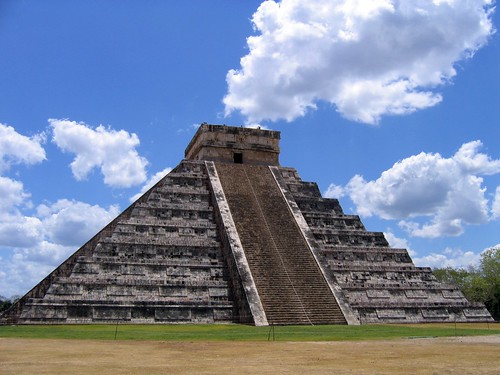
the real response i have to crystal's post is another thing we learned on the same tour - we also visited Tulum, a Mayan port city, and there was a building there, with small dark corridors near ground level leading back to little rooms, big enough for one person. these were the Myan equivalent of the maternity ward. our tour guide told us that the mayans viewed childbirth as a battle that the mother had to fight between life and death. he said that they also believed that this battle had to be fought alone if the mother and child were to be truly victorious - so, armed with nothing but advice from her mother and a rope to wrap around her stomach to provide a little extra push, a pregnant mother would enter one of these rooms when her water broke, and either emerge alive with a newborn baby, or lose the battle. i thought this might be an interesting tidbit of folk knowledge, since Dr.Petersen mentioned midwifery, but to my knowledge no one has done a post on that.
NOTE: so after writing this, i looked up the Wikipedia article on Mayan midwifery, which seems to explain an experience much different than described by my tour guide. the difference may be that the guide was talking about pre-conquistador traditions, whereas the Wikipedia article seems to focus on post-conquistador and modern traditions
Saturday, September 17, 2011
the manly art of wrestling
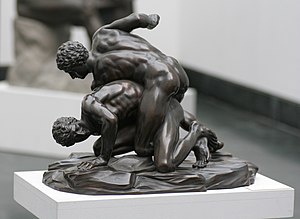
"Control your body, then control the body of someone else your size." "wrestling is dancing" After just a few minutes of instruction, both these statements make sense. Jake, my instructor, who in high school was ranked #2 in the nation in his weight class, was perfectly able to put me on the floor with a few quick movements . So, i don't mean to look like an arrogant jerk, but I'm pretty confident in my abilities to defend myself. i played offensive and defensive line on the varsity football team in high school. I'm in better shape than i look and years of weight lifting (off and on) make me feel like I'd stand a pretty good chance against pretty much anybody in class. (except ted) so getting thrown around like a little girl was definitely humiliating.

to start with, i know a bit about athletics from football, so we discussed the differences between a football stance and a wrestling stance. once i have the stance down, we did a basic leg attack. this was followed by a "high crotch" (it's not as awkward as it sounds) which allows you to gain control of your opponent's leg. finally, the slide by. this is a move where you use your opponent's stance against him. in a standard grappling position, you grab the back of their neck and hit their arm up with your other elbow. you then pull them towards you and pivot on the balls of your feet, pulling them down by their neck, twisting them to their back as they fall.

the knowledge that wrestlers have isn't a memorized list of moves to use against their opposition. it is an integral understanding of how the body works. the point of wrestling, as explained to me by Jake, is to take the way your opponent moves and use it against him. the way i could go from feeling perfectly balanced, stable and in control to on the floor in a second was excruciatingly unsettling.
the history of wrestling is so old that the style Jake practiced was grecco - or the Greek style of wrestling. it is one of the oldest folk knowledges around that is still in the same form it was thousands of years ago.

Thursday, September 15, 2011
Failed Folk knowledge/ Sibo Gomero
i quickly realized that i had stumbled across a nugget of folk knowledge gold. the majority of us know how to whistle, and this is usually learned in a pretty standard folk knowledge way. we have also talked about how language relates to folk knowledge. this, however, is the synthesis of these two. a practical skill, whistling, was transformed into a method of communication by the nomadic ancestors of the gomeran people who needed a way to communicate across the rough terrain of their island.
language is one of the most central forms of folk knowledge - we all learned a language as an infant - so i don't really know why i find this simple language so fascinating. maybe it's because i would be the town mute if i lived there, but then just when i thought i had no link to whistled
 speech, i found this..."In popular culture whistled languages are common in robots. R2-D2 is a well-known whistler from the Star Wars series of films who uses modulated whistles to communicate with other droids and express emotion. The emotions articulated in the film are understood by the human audience without the aid of facial expressions."(wiki) There are several cultures throughout the world who use whistled languages. these usually arise in conditions like that of the sibo gomero - low population density, rough terrain environments. this makes me wonder if Darwin would see this as a species adapting to its environment.
the final thing i would like to mention is that the spanish government recognized both that this language was a valuable piece of culture, and that it was disappearing rapidly (who's gonna whistle across the valley when you can text?), so they passed a law requiring it to be taught in gomeran schools, thus making the shift from this being a form of folk knowledge to an institutionalized form of knowledge like math and science.
learning about this amazing language makes me wonder, though - is this language a dialect of the father tongue, the mother tongue or is it it's own whistle-tongue?
Wednesday, September 14, 2011
Oops! i'm knowledging!
 so a really interesting thing happened this weekend. My nephews spent the night at our house Friday night. any of you who know a child probably know that two boys, ages seven and four, will not do well if they are kept in an apartment designed for two people for a long time.