Wednesday, November 9, 2011
Ancient Greek Universities
We have been talking recently in class about how universities revolutionized the storage and transmission of knowledge throughout history and throughout the world. The ancient Greek academies, lyceums, gymnasiums, and museums also contributed to this change.

Saturday, November 5, 2011
Numbers and Letters
Today's discussion in class raised an interesting question:
What happens when a writing system combines numbers and letters?
In addition, what happens when they are separate?
From heavy mysticism to advanced math, I think it makes a world of difference.
I also think it doesn't.
What happens when a writing system combines numbers and letters?
In addition, what happens when they are separate?
From heavy mysticism to advanced math, I think it makes a world of difference.
I also think it doesn't.
Friday, November 4, 2011
MysticitsyM (oooh.... mystic-y.....)
thanks to the written system of ancient Mesopotamia, we have a REALLY good idea as to the procedures of the types of events that are typically shrouded in mysticism, such as marriage, birth of children, etc. The Mesopotamian's obsession with keeping logistical records has allowed us to see that a marriage contract to them was pretty much the same type of "contract" that we think of today. there were a lot of weird little rules and exceptions, however that differ greatly from modern marital laws. surprisingly, i wasn't able to find a lot of evidence for "mystical" procedures involved with marriage. in fact, the Mesopotamian wedding ceremony seems a lot less weird than Korean Thanksgiving. the only "odd" practice is when the groom pours perfume on the bride's head - but who doesn't want to smell nice on their wedding day, right?
there are a few traces of mystic beliefs in Mesopotamian lore. In the epic of Gilgamesh, there is an interesting series of dreams predicting the future (as interpreted by Gilgamesh's mother), strongly suggesting that dreams were a big part of how Mesopotamians believed they had mystical experiences. there is also strong evidence of a link between what Christians may call gentile beliefs and the beliefs of the people of israel - the biblical " Merkabah " or Ezekiel's chariot dream, contains mythical images that correspond to Mesopotamian traditions(Vita Daphna Arbel)
what commonly accepted things in our society may be considered "mysticism" in 500 years?
Tuesday, November 1, 2011
The Oracles and Knucklebones
 |
| Pythia---The Oracle at Delphi |
Tuesday, October 25, 2011
The Emergence of Writing in Greek Antiquity
Do you believe that the transition between the days of pre-internet read a book and write a paper, and our current days of fast blue-tooth cord-free and other hyphenated techno-craze has been an easy one?
Do you think it has been entirely in the interest of all people?
Have we lost anything in making this transition?
Do you think it has been entirely in the interest of all people?
Have we lost anything in making this transition?
Friday, October 21, 2011
Adiabene 101
Adiabene(ܚܕܝܐܒ) was a small kingdom that made up part of the Armenian empire. though this country was only around for about a century, it's history contains religious shifts, two kings, ethical-political tension, martyrdom, Jewish rabbinic academies, and catholic archbishoprics.
now, before i go any further, i have to make clear the fact that i am definitely still taking about Mesopotamia. i had been searching out the earliest things i could find on Mesopotamia since i was assigned the culture. i then realized that there were people assigned Sumerians and Hittites, both of whom had excellent cuneiform posts yesterday. so rather than fight for the early mesopotamian culture spotlight, i though it might be interesting to examine a time period of extreme transition (since i figured that paradigm shifts count as knowledge turning points, why not look at the Mesopotamian cultures around the time Christianity is really catching on?) so i found this little gem of a case-study-in-a-country.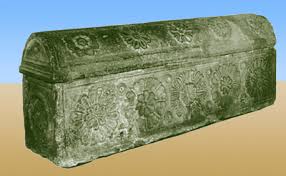
the Adiabene empire was a subservient empire to Persia, Assyria, and other Mesopotamian powerhouses, then in the first century BC, the country gained independence(not in the flag waving revolutionary war way America did, they just sort of were all of a sudden good enough to have a little respect). Izates, the king-to-be, converted from to Judaism at about the same time his mother did, followed by a large enough chunk of the general populace to make Judaism the primary religion in the country. the second most popular choice was that newfangled Christianity with all their Jesus talk, and in third came Zoroastrianism, a more traditional Mesopotamian religion.

now, this next part gets a bit inferrence-heavy, so bear with me and if my logic seems off, let me know. picture yourself as if you lived at the beginning of this kingdom. life's gotta be a little uncertain, seeing as how the country you live in didn't exist when you were born. not only that, but the king and a WHOLE BUNCH of your neighbors are either going to church at the synagogue, where they believe in a dude who got some fancy rocks from god, or to the christian church, where they believe that the head of their church is some dead-but-not dead guy who's alive but not here.... right..... .anyways - the world seems a bit turbulent (it gets better when you add in the fact that your dear sweet homeland will be no more by the time your kids die). so, this brings a few questions into my Adiabene mind. what the heck is going on?? where am i supposed to go to get a bit of stability? the Jews have their big rolls of paper, and seem to be the most stable non-traditional choice for a life direction, but grandma's ghost would haunt me forever if i stopped going to the Zoroastrian church (you can tell i haven't studied Zoroastrianism very thoroughly) but those Christians aren't completely crazy either - they have some le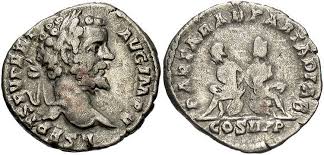 tters written by their leaders, who have spoken to the not-dead guy, apparently. since the political vicissitudes are a bit uncontrollable, all i can do is choose a way to live life, and one of these churches has to tell me the right way to go, right? so a logical choice seems to be to READ THEIR TEXTS. (the idea of hearing something you've never heard before, but reading the text and basing life decisions on what you read is NOT foreign to those of us who are Latter Day Saint Returned Missionaries). so. my musings aside on what the situation might be like and how i might deal with it aside, there is a point here. in this volatile environment of constantly changing knowledges, written texts give an individual a good chance to objectively become informed (something that oral and folk knowledges may not accomplish so well) and to adapt to the changes. adaptation is what survival is all about - so those individuals who best adapt to changing knowledge systems are the ones who survive, the ones who get their names in history books, etc.
how do you see this adaptation in today's society - seeing as how we are on the cusp of the data age?
images: The sarcophagus of Queen Helena of Adiabene, Frieze from the Tomb of Queen Helena of Adiabene near Jerusalem, roman coin depicting Bound Arab and Adiabene captives seated back to back on shields
now, before i go any further, i have to make clear the fact that i am definitely still taking about Mesopotamia. i had been searching out the earliest things i could find on Mesopotamia since i was assigned the culture. i then realized that there were people assigned Sumerians and Hittites, both of whom had excellent cuneiform posts yesterday. so rather than fight for the early mesopotamian culture spotlight, i though it might be interesting to examine a time period of extreme transition (since i figured that paradigm shifts count as knowledge turning points, why not look at the Mesopotamian cultures around the time Christianity is really catching on?) so i found this little gem of a case-study-in-a-country.
the Adiabene empire was a subservient empire to Persia, Assyria, and other Mesopotamian powerhouses, then in the first century BC, the country gained independence(not in the flag waving revolutionary war way America did, they just sort of were all of a sudden good enough to have a little respect). Izates, the king-to-be, converted from to Judaism at about the same time his mother did, followed by a large enough chunk of the general populace to make Judaism the primary religion in the country. the second most popular choice was that newfangled Christianity with all their Jesus talk, and in third came Zoroastrianism, a more traditional Mesopotamian religion.
now, this next part gets a bit inferrence-heavy, so bear with me and if my logic seems off, let me know. picture yourself as if you lived at the beginning of this kingdom. life's gotta be a little uncertain, seeing as how the country you live in didn't exist when you were born. not only that, but the king and a WHOLE BUNCH of your neighbors are either going to church at the synagogue, where they believe in a dude who got some fancy rocks from god, or to the christian church, where they believe that the head of their church is some dead-but-not dead guy who's alive but not here.... right..... .anyways - the world seems a bit turbulent (it gets better when you add in the fact that your dear sweet homeland will be no more by the time your kids die). so, this brings a few questions into my Adiabene mind. what the heck is going on?? where am i supposed to go to get a bit of stability? the Jews have their big rolls of paper, and seem to be the most stable non-traditional choice for a life direction, but grandma's ghost would haunt me forever if i stopped going to the Zoroastrian church (you can tell i haven't studied Zoroastrianism very thoroughly) but those Christians aren't completely crazy either - they have some le
how do you see this adaptation in today's society - seeing as how we are on the cusp of the data age?
images: The sarcophagus of Queen Helena of Adiabene, Frieze from the Tomb of Queen Helena of Adiabene near Jerusalem, roman coin depicting Bound Arab and Adiabene captives seated back to back on shields
Thursday, October 20, 2011
lonely thursday :(
so i was reading around on the rest of the class blogs, and found a great post by Emily from enLIGHTened about propaganda. this brings up a good subject that i think was semi-addressed in the library presentation today - the authority behind the document matters A TON. this isn't a huge new concept nor was it directly mentioned by the presenter lady, but just the fact that the Sumerians covered original tablets in a "security tablet" that could be broken and matched to the original text, and Romans kept copied information four times (two on the owner's tablets and two on the temple's tablets)signifies that the knowledge that the information recorded was authentic was important. i asked Dr. Petersen about the authentication methods used on the more papery writing media, and she said that signatures, wax seals, and the like were used for this purpose (this picture in this lump of wax can only be made by the king's ring, and if anyone other than the king is found in possession of this ring, he will be executed, therefore this document was really really authorized by the real king). she also mentioned how wherever there is an authentication system, there is forgery.
what i really found interesting is that propaganda is essentially that authority being abused to twist popular opinion. if BYU wanted to warp the minds of its students, it would publish heinous fliers about how all students must be married within one year of beginning at BYU, or you're not a true cougar. imagine the difference if this document were made in two forms - one without and illustration, just plain text, ending with a typed ..... -Cecil O. Samuelson. - the other form would have the exact same text, but would be on BYU letterhead, with pres. Samuelson's personal signature and a BYU seal stamped into the paper. one would be laughed at, while the other would do nothing less than create pretty intense ripples. think about it.....
Subscribe to:
Posts (Atom)